Monday, January 13, 2014

The Merry Widow?


A LOST LADY
by Willa Cather

Discussion Questions:

1. "Grace, variety, the lovely voice, the sparkle of fun and fancy in those dark eyes; all this was nothing. It was not a moral scruple she had outraged, but an aesthetic ideal. Beautiful women, whose beauty meant more than it said ... was their brilliancy always fed by something coarse and concealed? Was that their secret?"

"He burned to ask her one question, to get the truth out of her and set his mind at rest: What did she do with all her exquisiteness when she was with a man like Ellinger? Where did she put it away? And having put it away, how could she recover herself, and give one - give even him - the sense of tempered steel, a blade that could fence with anyone and never break?"

Niel is disappointed to discover that his ideal woman has feet of clay. Is this a disappointment that all [young] men must suffer in order to mature? Niel's mother died when he was young; does this have anything to do with his attraction and/or attachment to Mrs. Forrester? Is he more vulnerable than the other young men, at least in the beginning?

2. "I think just now it's the fashion for women to make themselves comfortable, before anything else." Mrs. Forrester glanced at him as if he had said something shocking. "Ah, that's just it! The two things don't go together. Athletics and going to college and smoking after dinner - Do you like it? Don't men like women to be different from themselves? They used to."

Comment on the change of fashion and manners of women in the '20s. Do changing fashions create confusion or establish a better social order? Think of some historical examples.

3. Could this tragedy have been prevented? Is it wise for older men to marry beautiful, vivacious women who are 25 years younger than they? Is it wise for those unsuited to country life to attempt it? It's an old story: rich, old men can "buy" themselves young, attractive wives. Is that necessarily a bad deal for either party? The Captain is not unhappy with the bargain; why is she?
"The longer Niel was with Captain Forrester in those peaceful closing days of his life, the more he felt that the Captain knew his wife better even than she knew herself; and that, knowing her, he - to use one of his own expressions - valued her."

4. Nowhere in the story is the subject of children brought up. If the Forresters had had children (or even if he had had children from his previous marriage), how would things have changed?

5. "As Niel walked back to his room behind the law offices, he felt frightened for her. When women began to talk about still feeling young, didn't it mean that something had broken?"

What does the author think has been broken? How important is it for older women to be gracious? Virtuous? Dignified?

6. Burdened with financial ruin and the Captain's illness, Mrs. Forrester lets herself, the house and her social standing go. "All the bars were down. She had ceased to care about anything." Yet she does work hard and tries to care for the Captain. Why?

7. There seem to be different social levels in Sweetwater: the rich (the Forresters and their guests), the naturally virtuous (Niel and his uncle) and the townspeople (especially the women). Is this order natural? When disaster strikes the townswomen take advantage of it to get above themselves. Does Niel restore order when he forbids them the house, or is it permanently compromised? Is this simply a sign of the times?

8. "It was Mrs. Forrester herself who had changed. Since her husband's death she seemed to have become another woman. For years Niel and his uncle, the Dalzells and all her friends, had thought of the Captain as a drag upon his wife; a care that drained her and dimmed her and kept her from being all that she might be. But without him, she was like a ship without ballast, driven hither and thither by every wind. She was flighty and perverse. She seemed to have lost her faculty of discrimination; her power of easily and graciously keeping everyone in his proper place."

What is Mrs. Forrester's predominant fault? What can be done to/by/for vivacious women to avoid her tragedy?

9. Which boundaries can/should be observed by widows, especially attractive widows? Mrs. Forrester tries to teach manners and social graces to the younger men. Is this praiseworthy? Is she successful? "[Niel] sighed as he thought how much work it meant to cook a dinner like this for eight people, and a beefsteak with potatoes would have pleased them better! They didn't really like this kind of food at all. Why did she do it?"

10."It was what he most held against Mrs. Forrester; that she was not willing to immolate herself, like the widow of all these great men, and die with the pioneer period to which she belonged; that she preferred life on any terms."

Is this a bit harsh? What's a girl to do? After all, she is still fairly young.

11. This story is very similar to 'Breakfast at Tiffany's'. Both stories eloquently relate the sadness of the men who are fond of these women and painfully watch their self-inflicted destruction. Yet both women, in the end, feel that they have done well for themselves. Have they?

Friday, December 20, 2013

2014 Reading List


  • A Lost Lady - Willa Cather
  • Illiad - Homer
  • Shadows and Images - Meriol Trevor
  • Short Stories - Henry Lawson
  • Homage to Catalonia - George Orwell
  • Anabasis - Xenophon (excerpt)
  • Plutarch Lives
  • The Road - Cormac McCarthy
  • Josef Pieper - Matt Anger
  • Charles Dickens - G.K.Chesterton
  • The Secret Lives of Buildings - Edward Hollis
  • Invisible Cities - Italo Calvino
  • J.B.Powers

Thursday, December 19, 2013

THE SCHOOL FOR SCANDAL


by Richard Sheridan

Discussion Questions:

1. Is there a difference between gossiping and scandal-mongering?

2. What part does motive play? Consider Lady Candor and Lady Sneerwell.

3. Subject matter: fact or fiction? First or second-hand information? Naming names?

4.Consider these professionals and their boundaries: journalists, detectives, doctors, lawyers, confessors.

5. Are men and women equally tempted to scandal-mongering? How do we feel about the men in this play?

6. What part does idleness play in these characters, both men and women?

7. Reputations: who has more to lose?

8. What part does natural curiosity play?

9. Gossip disguised as a prayer request; are we guilty?

Tuesday, February 12, 2013

Are diamonds really a girl's best friend?


The Diamond As Big As the Ritz
by F.Scott Fitzgerald

1. What is the purpose of this story, and short stories in general? Unlike Chekhov, it isn't a slice of life. Unlike Poe, it's not written to horrify. What are we supposed to think or feel at the end? What impression is he trying to give?

2. Did the author keep us guessing? Was the ending a surprise?

3. Does Fitzgerald accurately portray the qualities of the rich and middle-class? Does his humor seem out-of-place in this story? What about life in Hades (MO)?

4.What is the mystique surrounding the Jazz Age? What is its enduring appeal?

Further reading: The Great Gatsby
Movies: The Great Gatsby, The Curious Case of Benjamin Button

Thursday, January 17, 2013

2013 READING LIST

Tuesday, May 03, 2011

The Book of Job

THE BOOK OF JOB


Job and His Wife, Georges de la Tour


Discussion Questions:

1. What is the basic problem explored in Job? Do we get an answer? Are we satisfied with it?

2. What did you think of the prologue in which Satan gets permission to severely test Job? Does this really happen or is it simply a literary device? Is it a parable?

3. Why is God so hard on Job's three friends? What was their basic argument to Job? What's the problem with it? Why isn't Elihu included in the rebuke? What is the proper response to another's suffering?

4. Most of us blame God when things go badly in our lives; is this justified? Is there a difference between discipline and punishment? Was Job being disciplined or punished? Are there different causes of and types of suffering?

5. Job lived before the time of Christ. Is his suffering a type of Christ's own suffering? How does Job's suffering differ from ours? Are his problems relevant to us? Are we better off than he was? Did you notice some verses where he cries out for a redeemer or mediator between him and God? (Job 9:32-35, 14:16-17, 19:25-27, 23:1-7, 33:23-25)

6. What about Job's wife?

7. Is it ok to get angry at God? Was Job self-righteous or in the right? If he was in error, what was his error? Should we ever question God? Think about Abraham, Moses, David. Have you ever noticed what great arguers and debaters the Jews are?

8. The Book of Job is an interesting example of dramatic irony in literature. The reader knows all along why these things are happening to Job yet is forced to listen to his friends' fruitless arguments. Then God speaks and it seems like the tables are turned even on the reader. At the end of it all, do we really know what God has been up to?

9. Does Job's restoration satisfy us? Was he satisfied? How about his wife?

Thank you to Nancy for these questions!

Vicki has one, too:

Did anyone notice a similarity between Job and Odysseus? It seems as if God treats Job very much the same way as the gods do Odysseus. The Book of Job is very early on in the process of Revelation. Is it unremarkable, then, that both stories should have a similar understanding of the relationship between God and man? In understanding this relationship, which parts come naturally, and which thru Revelation? How do the two stories differ?

Further Reading:

The Only Problem - Muriel Spark

Saturday, March 05, 2011

The Prime of Life

THE PRIME OF MISS JEAN BRODIE
Muriel Spark

Discussion questions:

1. "By reducing Miss Brodie to nothing more than a collection of maxims, Spark forces us to become Brodie's pupils. In the course of the novel we never leave the school to go home, alone, with Miss Brodie. We surmise that there is something unfulfilled and even desperate about her, but the novelist refuses us access to her interior. Brodie talks a great deal about her prime, but we don't witness it, and the nasty suspicion arises that perhaps to talk so much about one's prime is by definition to be in it no longer." - James Wood

Do Miss Brodie's progressive principles and method reflect a realistic vision for her girls and their futures, or is the education she gives them mostly self-justification? Does she really want them to achieve great things and thereby, perhaps, miss out on the more common-place happiness of family life?

2. Why is Miss Brodie's love-life thwarted? Recalling Miss Brodie's story of her ancestor, Willie Brodie, does Miss Brodie die cheerfully on a gibbet of her own devising?

3. "Her disapproval of the Church of Rome was based on her assertions that it was a church of superstition, and that only people who did not want to think for themselves were Roman Catholics. In some ways, her attitude was a strange one, because she was by temperament suited only to the Roman Catholic Church; possibly it could have embraced, even while it disciplined, her soaring and diving spirit, it might even have normalised her." Does this comment reflect Spark's own decision to become a Catholic?

4. Why does Sandy "betray" Miss Brodie? "If you did not betray us it is impossible that you could have been betrayed by us. The word betrayal does not apply ..."

5. Sandy says, "She thinks she is Providence ... she thinks she is the God of Calvin, she sees the beginning and the end". Does Miss Brodie assume godlike prerogatives?

6. Why is Sandy always described as having small eyes?

7. Is the author's terse style off-putting?

Of Interest:
- The Prime of Miss Jean Brodie, 1969, starring Maggie Smith (pictured above)

Sunday, January 09, 2011

A Classical Education

A Traveller's Tale; On Patrick Leigh Fermor


Discussion Questions:
1. The Duchess and PLF have maintained a lively correspondence for over 50 years. Is such a thing possible nowadays? Does email suffice? What of the charming incidentals of letter-writing: PLF's hand-drawn illustrations, the sensory experience of reading pen on paper, the pleasure of filing letters away in a special box?

2. Our warrior-poets, where are they?

3. The classical education which both correspondents received (although the Duchess's was of a more feminine type) creates a cultural and literary bond between them and the many other characters who come into their lives. What do we have to replace this, if anything?

4. What part does a classical education play in character development? How did they survive the ordeals which life had in store for them (WW2, financial struggles, family issues, hard work, loss) without resorting to psychiatrists and pharmaceuticals?

5. Self-esteem; is it overrated? Both correspondents have a lively sense of humour and playfulness and, yet, they are both able to express deep emotion without sentimentality. How does a classical education help achieve such balance?

6. Is any one else charmed by the idea of the Duchess spending her days in chicken coops & vegetable gardens, in stout tweeds, and her evenings glamorously dressed to entertain the nobility of England?

2011 Reading List

  • A Traveler's Tale; On Patrick Leigh Fermor
  • Selections from "The Essays, Articles & Reviews of Evelyn Waugh", ed. by Donat Gallagher
  • The Prime of Miss Jean Brodie - Muriel Spark
  • The Book of Job
  • The Violins of Saint-Jacques - Patrick Leigh Fermor
  • The Haunted Bookshop - Christopher Morley
  • My Life in France - Julia Child
  • Diary of a Madman - Lu Xun
  • Lilies of the Field - William Barrett
  • The Closing of the Muslim Mind - Robert Reilly
  • I Drink, Therefore I Am - Roger Scruton

Monday, October 11, 2010

"Is she or ain't she?"

BREAKFAST AT TIFFANY'S
Truman Capote

Discussion questions:
1. Is there anything particularly modern about Miss Holly Golightly? Is the idea of human beings treating themselves, or others, as commoditites a new one?

2. Comment on the following dialogue:
"So, what do you think: is she or ain't she?"
"Ain't she what?"
"A phony."
"I wouldn't have thought so."
"You're wrong. She is a phony. But on the other hand you're right. She isn't a phony because she's a real phony."

3. Manners and mores were declared "out-dated" in the 60s, and those who clung to them were accused of hypocracy. What are the arguments pro/con? What led to this philosophic development, and what followed it?

4. Post-war America suffered an identity crisis (we'll talk more about this after reading 'God and the Atom'). How did the gradual de-humanizing of society affect individual personalities? How did it affect Miss Golightly? Why is she so insecure?

5. Given the autobiographical nature of this story, what is Capote trying to tell us about himself? Is the vague hope of redemption he accords Miss Golightly (at the end of the story) meant to imply that Capote did not, finally, despair of himself?

6. "Why did God make me?" is the perennial question asked by man. Did Capote, or Miss Golightly, ever come to a conclusion about this?

Of Interest:
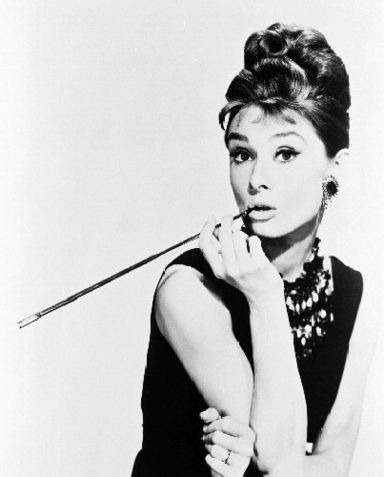
- Breakfast at Tiffany's, 1961, directed by Blake Edwards, starring Audrey Hepburn at her most gorgeous (pictured above)

Friday, April 30, 2010

Post-Modernism

“You may drive out Nature with a pitchfork, yet she will ever hurry back, and, ere you know it, will burst through your foolish contempt in triumph” - Horace


THE CHILDREN OF MEN
P.D.James

Discussion questions:
1. Which characteristics define Modernism and Post-Modernism? Does this story fit either definition?

2. Does James' vision of a future dystopia ring true? Are we already there?

3. What does Science, as religion, demand in the way of sacrifice? What happens when Science is unmasked as a false god (in failing to cure infertility)?

4. What can we say about the five demands? Are they reasonable? Well ordered? Are they the products of despair or hope?

5. Does the author acurately assess the psychological, biological, social and religious consequences of infertility? Are there any flaws in her argument?

6. Do voluntary contraception and involuntary infertility have the same consequences on either the individual or population level? Is fertility as important to men as it is to women?

7. How necessary is population control to the power of the State?

8. Is contraception dehumanizing? Is contraception necessarily followed by impotency? The author mentions porn shops as the government's answer to lack of sexual desire. What about anti-depressants (for women) and Viagra?

9. A generation ago a man would have been filled with shame to publicly acknowledge his impotency, whereas today he'll proudly be a poster boy for Viagra. What has changed mens' fundamental perception of themselves and their role in society?

Of Interest:
- Children of Men, 2006, starring Clive Owen and Julianne Moore

Wednesday, April 28, 2010

The Most Aggressively Inarticulate Generation

Typography from Ronnie Bruce on Vimeo.

The text: Totally like whatever, you know? by Taylor Mali

Perfection?

THE BIRTHMARK
Nathaniel Hawthorne

Discussion questions:
1. Does the story come across as all together too melodramatic? Is the plot believable? Do the characters, as portrayed, ring true, or are they types?

2. Which factors could explain Georgiana's willingness to undergo the operation?

3. Is the temptation to destroy 'the good' in pursuit of 'the perfect' typical of idealists? Of melancholics? How is this temptation counteracted in everyday life?

4. "The volume, rich with achievements that had won renown for its author, was yet as melancholy a record as ever mortal hand had penned. It was the sad confession and continual exemplification of the shortcomings of the composite man, the spirit burdened with clay and working in matter, and of the despair that assails the higher nature at finding itself so miserably thwarted by the earthly part."
Are idealists inclined to envy the angels their spirits? How does this envy develop in religion?

5. "Thus ever does the gross fatality of earth exult in its invariable triumph over the immortal essence which, in this dim sphere of half development, demands the completeness of a higher state. Yet, had Alymer reached a profounder wisdom, he need not thus have flung away the happiness which would have woven his mortal life of the selfsame texture with the celestial. The momentary circumstance was too strong for him; he failed to look beyond the shadowy scope of time, and, living once for all in eternity, to find the perfect future in the present."
What is the difference between the idealist and the ideologue? Are all ideologies fatally flawed? What are the inevitable consequences of pursuing ideologies?

6. Is perfection possible in literature? In art? What price does the artist pay for perfection, or even the pursuit of perfection? Is it worth it? Is compromise possible?

7. Does anyone else except me get really excited by Hawthorne's masterful use of punctuation? His commas are exquisite; his semi-colons beyond reproach! How important is punctuation to the expression of ideas? Does vers libre succeed? What about punctuation in our lives? Nature gives us some (the seasons), religion others (feasts) and culture still others (family dinners). What happens when we do away with punctuation?

Further questions

Wednesday, April 14, 2010

2009 Reading List

Monday, April 12, 2010

2010 Reading List

  • The Birthmark - Nathaniel Hawthorne
  • Willa Cather's Capitalism - Stephen D.Cox
  • Sloth - Evelyn Waugh
  • The Burned Out Case - Graham Greene
  • The Children of Men - P.D.James
  • Short Stories - Anton Chekhov
  • Selected Stories of Edgar Allen Poe: The Cask of Amontillado, The Tell-Tale Heart, The Black Cat, The Fall of the House of Usher
  • Breakfast at Tiffany's - Truman Capote
  • Dickens, Dali & others - George Orwell
  • God and the Atom - Ronald Knox