Saturday, March 05, 2011

The Prime of Life

THE PRIME OF MISS JEAN BRODIE
Muriel Spark

Discussion questions:

1. "By reducing Miss Brodie to nothing more than a collection of maxims, Spark forces us to become Brodie's pupils. In the course of the novel we never leave the school to go home, alone, with Miss Brodie. We surmise that there is something unfulfilled and even desperate about her, but the novelist refuses us access to her interior. Brodie talks a great deal about her prime, but we don't witness it, and the nasty suspicion arises that perhaps to talk so much about one's prime is by definition to be in it no longer." - James Wood

Do Miss Brodie's progressive principles and method reflect a realistic vision for her girls and their futures, or is the education she gives them mostly self-justification? Does she really want them to achieve great things and thereby, perhaps, miss out on the more common-place happiness of family life?

2. Why is Miss Brodie's love-life thwarted? Recalling Miss Brodie's story of her ancestor, Willie Brodie, does Miss Brodie die cheerfully on a gibbet of her own devising?

3. "Her disapproval of the Church of Rome was based on her assertions that it was a church of superstition, and that only people who did not want to think for themselves were Roman Catholics. In some ways, her attitude was a strange one, because she was by temperament suited only to the Roman Catholic Church; possibly it could have embraced, even while it disciplined, her soaring and diving spirit, it might even have normalised her." Does this comment reflect Spark's own decision to become a Catholic?

4. Why does Sandy "betray" Miss Brodie? "If you did not betray us it is impossible that you could have been betrayed by us. The word betrayal does not apply ..."

5. Sandy says, "She thinks she is Providence ... she thinks she is the God of Calvin, she sees the beginning and the end". Does Miss Brodie assume godlike prerogatives?

6. Why is Sandy always described as having small eyes?

7. Is the author's terse style off-putting?

Of Interest:
- The Prime of Miss Jean Brodie, 1969, starring Maggie Smith (pictured above)

Sunday, January 09, 2011

A Classical Education

A Traveller's Tale; On Patrick Leigh Fermor


Discussion Questions:
1. The Duchess and PLF have maintained a lively correspondence for over 50 years. Is such a thing possible nowadays? Does email suffice? What of the charming incidentals of letter-writing: PLF's hand-drawn illustrations, the sensory experience of reading pen on paper, the pleasure of filing letters away in a special box?

2. Our warrior-poets, where are they?

3. The classical education which both correspondents received (although the Duchess's was of a more feminine type) creates a cultural and literary bond between them and the many other characters who come into their lives. What do we have to replace this, if anything?

4. What part does a classical education play in character development? How did they survive the ordeals which life had in store for them (WW2, financial struggles, family issues, hard work, loss) without resorting to psychiatrists and pharmaceuticals?

5. Self-esteem; is it overrated? Both correspondents have a lively sense of humour and playfulness and, yet, they are both able to express deep emotion without sentimentality. How does a classical education help achieve such balance?

6. Is any one else charmed by the idea of the Duchess spending her days in chicken coops & vegetable gardens, in stout tweeds, and her evenings glamorously dressed to entertain the nobility of England?

2011 Reading List

  • A Traveler's Tale; On Patrick Leigh Fermor
  • Selections from "The Essays, Articles & Reviews of Evelyn Waugh", ed. by Donat Gallagher
  • The Prime of Miss Jean Brodie - Muriel Spark
  • The Book of Job
  • The Violins of Saint-Jacques - Patrick Leigh Fermor
  • The Haunted Bookshop - Christopher Morley
  • My Life in France - Julia Child
  • Diary of a Madman - Lu Xun
  • Lilies of the Field - William Barrett
  • The Closing of the Muslim Mind - Robert Reilly
  • I Drink, Therefore I Am - Roger Scruton

Monday, October 11, 2010

"Is she or ain't she?"

BREAKFAST AT TIFFANY'S
Truman Capote

Discussion questions:
1. Is there anything particularly modern about Miss Holly Golightly? Is the idea of human beings treating themselves, or others, as commoditites a new one?

2. Comment on the following dialogue:
"So, what do you think: is she or ain't she?"
"Ain't she what?"
"A phony."
"I wouldn't have thought so."
"You're wrong. She is a phony. But on the other hand you're right. She isn't a phony because she's a real phony."

3. Manners and mores were declared "out-dated" in the 60s, and those who clung to them were accused of hypocracy. What are the arguments pro/con? What led to this philosophic development, and what followed it?

4. Post-war America suffered an identity crisis (we'll talk more about this after reading 'God and the Atom'). How did the gradual de-humanizing of society affect individual personalities? How did it affect Miss Golightly? Why is she so insecure?

5. Given the autobiographical nature of this story, what is Capote trying to tell us about himself? Is the vague hope of redemption he accords Miss Golightly (at the end of the story) meant to imply that Capote did not, finally, despair of himself?

6. "Why did God make me?" is the perennial question asked by man. Did Capote, or Miss Golightly, ever come to a conclusion about this?

Of Interest:
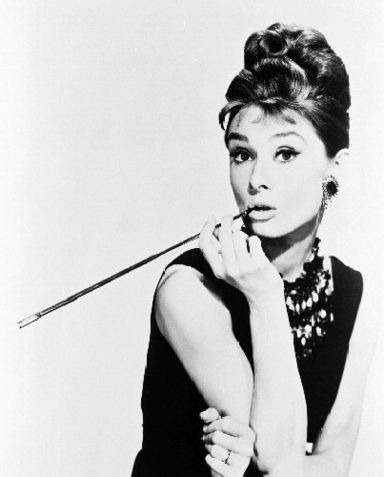
- Breakfast at Tiffany's, 1961, directed by Blake Edwards, starring Audrey Hepburn at her most gorgeous (pictured above)

Friday, April 30, 2010

Post-Modernism

“You may drive out Nature with a pitchfork, yet she will ever hurry back, and, ere you know it, will burst through your foolish contempt in triumph” - Horace


THE CHILDREN OF MEN
P.D.James

Discussion questions:
1. Which characteristics define Modernism and Post-Modernism? Does this story fit either definition?

2. Does James' vision of a future dystopia ring true? Are we already there?

3. What does Science, as religion, demand in the way of sacrifice? What happens when Science is unmasked as a false god (in failing to cure infertility)?

4. What can we say about the five demands? Are they reasonable? Well ordered? Are they the products of despair or hope?

5. Does the author acurately assess the psychological, biological, social and religious consequences of infertility? Are there any flaws in her argument?

6. Do voluntary contraception and involuntary infertility have the same consequences on either the individual or population level? Is fertility as important to men as it is to women?

7. How necessary is population control to the power of the State?

8. Is contraception dehumanizing? Is contraception necessarily followed by impotency? The author mentions porn shops as the government's answer to lack of sexual desire. What about anti-depressants (for women) and Viagra?

9. A generation ago a man would have been filled with shame to publicly acknowledge his impotency, whereas today he'll proudly be a poster boy for Viagra. What has changed mens' fundamental perception of themselves and their role in society?

Of Interest:
- Children of Men, 2006, starring Clive Owen and Julianne Moore

Wednesday, April 28, 2010

The Most Aggressively Inarticulate Generation

Typography from Ronnie Bruce on Vimeo.

The text: Totally like whatever, you know? by Taylor Mali

Perfection?

THE BIRTHMARK
Nathaniel Hawthorne

Discussion questions:
1. Does the story come across as all together too melodramatic? Is the plot believable? Do the characters, as portrayed, ring true, or are they types?

2. Which factors could explain Georgiana's willingness to undergo the operation?

3. Is the temptation to destroy 'the good' in pursuit of 'the perfect' typical of idealists? Of melancholics? How is this temptation counteracted in everyday life?

4. "The volume, rich with achievements that had won renown for its author, was yet as melancholy a record as ever mortal hand had penned. It was the sad confession and continual exemplification of the shortcomings of the composite man, the spirit burdened with clay and working in matter, and of the despair that assails the higher nature at finding itself so miserably thwarted by the earthly part."
Are idealists inclined to envy the angels their spirits? How does this envy develop in religion?

5. "Thus ever does the gross fatality of earth exult in its invariable triumph over the immortal essence which, in this dim sphere of half development, demands the completeness of a higher state. Yet, had Alymer reached a profounder wisdom, he need not thus have flung away the happiness which would have woven his mortal life of the selfsame texture with the celestial. The momentary circumstance was too strong for him; he failed to look beyond the shadowy scope of time, and, living once for all in eternity, to find the perfect future in the present."
What is the difference between the idealist and the ideologue? Are all ideologies fatally flawed? What are the inevitable consequences of pursuing ideologies?

6. Is perfection possible in literature? In art? What price does the artist pay for perfection, or even the pursuit of perfection? Is it worth it? Is compromise possible?

7. Does anyone else except me get really excited by Hawthorne's masterful use of punctuation? His commas are exquisite; his semi-colons beyond reproach! How important is punctuation to the expression of ideas? Does vers libre succeed? What about punctuation in our lives? Nature gives us some (the seasons), religion others (feasts) and culture still others (family dinners). What happens when we do away with punctuation?

Further questions

Wednesday, April 14, 2010

2009 Reading List

Monday, April 12, 2010

2010 Reading List

  • The Birthmark - Nathaniel Hawthorne
  • Willa Cather's Capitalism - Stephen D.Cox
  • Sloth - Evelyn Waugh
  • The Burned Out Case - Graham Greene
  • The Children of Men - P.D.James
  • Short Stories - Anton Chekhov
  • Selected Stories of Edgar Allen Poe: The Cask of Amontillado, The Tell-Tale Heart, The Black Cat, The Fall of the House of Usher
  • Breakfast at Tiffany's - Truman Capote
  • Dickens, Dali & others - George Orwell
  • God and the Atom - Ronald Knox

Friday, October 26, 2007

Ideas Have Consequences

IDEAS HAVE CONSEQUENCES
Richard Weaver
1948

Discussion Questions:
1. Does Weaver present a cogent argument for his position that it was Nominalism (a denial of transcendentals), as upheld by William of Occam, which changed the course of Western culture?

2. Is the term 'materialism' used correctly (i.e. the complete denial of anything other than the material world) or does it usually imply an inordinate values system?

3. Even if we agree with Weaver's analysis of what ails Western culture, do we agree with his prognosis and prescription?

4. Is the middle class really the villain of the piece?

Thursday, October 25, 2007

Road Trip


THE LOST CONTINENT Travels in Small-Town America
Bill Bryson
Perenial, 1990

Bill Bryson's travel books are best-sellers and it's easy to see why. He combines interesting facts with humorous commentary. He captures the experience of the bulk of American tourists, whether abroad or driving around the country on summer vacation. Sometimes vulgar, sometimes irreverent, his books make amusing and light summer reading.

"I come from Des Moines. Somebody had to. When you come from Des Moines you either accept the fact without question and settle down with a local girl named Bobbi and get a job at the Firestone factory and live there forever and ever, or you spend your adolescence moaning at length about what a dump it is and how you can't wait to get out, and then you settle down with a local girl named Bobbi and get a job at the Firestone factory and live there forever and ever. Hardly anyone ever leaves. This is because Des Moines is the most powerful hypnotic known to man. ... Everybody in Des Moines is strangely serene."

"I was headed for Nebraska. Now there's a sentence you don't want to have to say too often if you can possible help it. Nebraska must be the most unexciting of all the states. Compared with it, Iowa is paradise. Iowa at least is fertile and green and has a hill. Nebraska is like a 75,000-square-mile bare patch. In the middle of the state is a river called the Platte, which at some times of the year is two or three miles wide. It looks impressive until you realize that it is only about four inches deep. You could cross it in a wheelchair. On a landscape without any contours or depressions to shape it, the Platte just lies there, like a drink spilled across a tabletop. It is the most exciting thing in the state."

"I hate the way these places let you get all the way there before disclosing just how steep and confiscatory the admission price is. ... I mean honestly, $24.50 just to walk around a restored village for a couple of hours. I gave silent thanks that I had ditched the wife and kids at Manchester Airport. A day out here with the family could cost almost $100 - and that's before paying for ice creams and soft drinks and sweatshirts saying, BOY, WERE WE SCREWED AT COLONIAL WILLIAMSBURG."

"National park visitors' centers are always the same. They always have some displays in glass cases that manage to be both boring and uninformative, ... , some racks of books and brochures with titles like Pewter in History and Vegetables of Old Philadelphia, ... "

Other titles by the same author:
- A Walk in the Woods (walking the Appalachian Trail)
- Neither Here Nor There, Travels in Europe
- Notes From a Small Island (England)
- In a Sunburned Country (Australia)

More Blood and Guts

ALL QUIET ON THE WESTERN FRONT
Erich Maria Remarque

Discussions Questions:
1. Did the capacity for fighting and war exist in man before the Fall or is it a result of original sin? Was Adam a warrior before the Fall? Should he have physically protected Eve from the Serpent? (Remember the great scene in 'Perelandra' when Ransom engages in physical combat with the 'devil') Aquinas says that carnivores were created with sharp teeth and mosquitoes with stingers, which were used ordinately before the Fall (i.e. in the correct manner, on the correct victim, at the correct time, etc.). Does this same theory apply to man and his fighting instincts?

2. Are fighting and warfare always the result of vice (envy, anger, pride, etc)? Are they a mark of civilization or barbarism?

3. Fighting obviously corresponds to something deep within the male. Are there born warriors, men who by nature are designed for this purpose? Is every man capable of being a warrior? If not, is that a deficiency?

4. How should we handle this 'fighting instinct' with our boys?

5. How does the natural instinct to protect become inordinate? What are the effects of this inordinate passion? (think back to 'The Great Santini')

6. What psychological effects does war have on the loser? The victor?

7. Should war be avoided at all costs? Has modern warfare gone "too far"? Can war be regulated? What happens, for instance, when one party refuses to play by the rules? Looking at history we see that it is often the party who is willing to break the rules who ends up victorious. Is this honorable or dishonorable; is it a question of the end justifying the means?

8. Is demanding 'unconditional surrender' a wise policy? To what extent should we seek to completely annihilate our enemies? Is there a difference between spiritual and material warfare in this regard?

Further Reading:
- 'The Great Santini' by Pat Conroy

Wednesday, October 24, 2007

2008 Reading List

  • A History of the World in 6 Glasses - Tom Standage
  • Wives and Daughters - Elizabeth Gaskell
  • Home - Witold Rybczynski
  • Brideshead Revisited - Evelyn Waugh
  • The Defamation of Pius XII - Ralph McInerney
  • Picture of Dorian Grey - Oscar Wilde
  • The Canterbury Tales - Geoffrey Chaucer
  • Death Comes For the Archbishop - Willa Cather
  • The Heresy of Formlessness - Martin Mosebach
  • The Cocktail Party - T.S.Eliot
  • What's Wrong with the World - G.K.Chesterton

Sunday, October 21, 2007

It Was a Dark and Stormy Night

ETHAN FROME
Edith Wharton

Discussion Questions:
1. Literary critic Lionel Trilling wrote in his essay, 'The Inertia of Morality', "I had not read Edith Wharton's little novel in a good many years ... I recalled it as not at all the sort of book that deserved to stand in a list which included The Brothers Karamazov and Billy Budd ... when I read it again it turned out to be pretty much as I had recalled it, not a great book or even a fine book, but a factitious book, perhaps even a cruel book."
Did you have a similar reaction? Why or why not?

2. What are the temperaments of the three main characters: Ethan, Mattie and Zeena? Does the author cause you to like or care about any of them? Is Ethan strong or weak, courageous or cowardly? Is he a tragic hero, one whose basic goodness and superiority are marred by a tragic flaw such as pride, ambition, or poor judgment, leading to his downfall?

3. Could Ethan ever have found a way to be happy in his marriage to Zeena, assuming he hadn't met Mattie? Should he have run away with Mattie? Are some marriages too awful? Did he and Mattie deserve their fate? Is that Wharton's point?

4. Ethan Frome was written while Edith Wharton lived in Paris away from her husband, following a passionate but doomed love affair there with a married man. Is this novel a justification for her own actions, a general social critique, or a story that just had to be told, having a life of its own? Does the novel hold together as a novel, or does it seem contrived, even a literary experiment on the part of the author? (Note the author's introduction)

5. The setting is almost a fourth character in the novel. Why does most of the action take place in winter? Any thoughts on why Wharton chose a rural New England setting depicting extreme poverty that is very different than her usual high society type of setting? Is she successful (i.e. believable) in portraying Frome's situation? How does the presence of the narrator contribute (or not) to the novel's success?

6. There is little if any mention of God or religion other than the church at the bottom of the hill, where the only activity is dancing, not worship. Does this absence strike you as odd? Why does Wharton so pointedly leave out this important cultural element of New England village life?

7. Wharton was a devotee of Naturalism, a school of thought that makes individuals victims of forces outside themselves, such as heredity, environment, and conventional culture. Explain how this is played out in Ethan Frome.

8. Some critics have likened this story to an inverted fairly tale. Do you see any resemblance to traditional fairy tales? What fairy tale elements do you see? How is this story different?

9. Trilling also wrote, "There is in Ethan Frome an image of life-in-death, of hell-on-earth, which is not easily forgotten: the crippled Ethan and Zeena, his dreadful wife, and Mattie, the once charming girl he had loved, now bedridden and querulous with pain, all living out their death in the kitchen of the desolate Frome farm - a perpetuity of suffering memorializes a moment of passion. It is terrible to comtemplate, it is unforgettable, but the mind can do nothing with it, can only endure it ... What is more, the novel seemed to me quite unavailable for any moral discourse. In the context of morality, there is nothing to say about Ethan Frome. It presents no moral issue."
Do you agree? If not, what moral issue is considered in the novel? Does the situation of this novel make sense in today's world? Could it happen now? Would a typical young American today even understand the limitations these characters faced?

10. Trilling goes on to state, however, that, "there is in Ethan Frome an idea of considerable importance, which is this: that moral inertia, the not making of moral decisions, constitutes a large part of the moral life of humanity. This isn't an idea that literature likes to deal with. Literature is charmed by energy and dislikes inertia. It characteristically represents morality as positive action ... Yet the dull daily world sees something below this delightful preoccupation of literature and moral philosophy. It is aware of the morality of inertia, and of its function as a social base, as a social cement. It knows that duties are done for no other reason than that they are said to be duties; for no other reason, sometimes, than that the doer has not really been able to conceive of any other course, has, perhaps, been afraid to think of any other course ... This is the morality of habit, or the morality of biology ... This is morality as it is conceived by the great mass of people in the world. And with this conception of morality goes the almost entire negation of any connection between morality and destiny. A superstitious belief in retribution may play its part in the thought of simple people, but essentially they think of catastrophes as fortuitous, without explanation, without reason."
Have you observed this moral inertia? Is it beneficial or detrimental? Is it possible, desirable, or even obligatory to rise above this unthinking approach to morality? What elements in a person's life could make such a higher moral view possible? Do people often live on differing levels of moral awareness depending on the moral issue at hand, thus living in a kind of dualistic way?

Thanks to Nancy for these questions!

Saturday, October 20, 2007

The Generation Gap

FATHERS AND SONS
Ivan Turgenev


The Turf Bench by Ilya Repin

Discussion Questions:
1. Turgenev's goal seems to be the juxtaposition of the 'old' and the 'new' in a changing Russia. Compare:
- the female characters: Eudoxia Kukshin, Madame Odintzov and Arina Vlassyevna (Barazov's mother).
" ... my observations lead me to suppose that free-thinking women are monstrosities." (Bazarov)
- the male characters: Pavel Petrovich and the two fathers & sons.
"We break things up because we are a force." (Arkady)
" A force! The wild Kalmuk and the Mongolian have force ... We value civilization ..." (Pavel)


2. 'The Generation Gap': is it fact or fiction?

3. Compare the economic conditions in the Old and New Russia (feudalism vs. the Emancipation of the Serfs). Was it an economic or philosophic change which eventually led to the Communist Revolution?

4. Discuss the German influence on the New Russian character (romanticism vs. practicality; morality vs. nihilism; religion vs. atheism).
"A good chemist is more useful than a score of poets" (Bazarov)

5. Turgenev wrote: "If the reader doesn't come to love Bazarov, with all his coarseness, callousness, pitiless dryness and harshness, then I have missed the mark. I imagined a gloomy, wild, large figure, half grown out of the soil, strong, spiteful, honest - doomed to perish because still in the anteroom of the future."
Does the reader come to love Bazarov? How does Bazarov change over the course of the story and to what do we attribute these changes? Does he become more human, and therefore more lovable?

6. "... the Future is, of all things, the least like eternity. It is the most completely temporal part of time - for the Past is frozen and no longer flows, and the Present is all lit up with eternal rays. Hence the encouragement we have given to all those schemes of thought such as Creative Evolution, Scientific Humanism, or Communism, which fix men's affections on the Future ... we want a man hag-ridden by the Future - haunted by visions of an imminent heaven or hell upon earth - ready to break the Enemy's commands in the present if by so doing we make him think he can attain the one or avert the other ..." (C.S.Lewis, The Screwtape Letters).
Turgenev does an admirable job of portraying this temptation in the character of Bazarov. Which scenes in the story illustrate this idea of the Present vs. the Future?
"Vassily Ivanich removed his hands from his face and embraced his wife, his constant companion, with a warmth greater than he had ever shown her in his youth; she had consoled him in his grief."

7. Is Bazarov's fate ironic? Tragic? What about the fate of Russia?

Of Related Interest:
- D.B.Wyndham-Lewis' delightful spoof of Russian Literature: 'A Bouquet for Moscow'.
- P.G.Wodehouse's spoof of Russian authors and suburban literary societies: 'The Clicking of Cuthbert'.

Thursday, March 22, 2007

Blood and Guts


THE SONG OF ROLAND
Translated by Dorothy Sayers

Discussion Questions:
1. What is the moral of the story?

2. Of what does the tragedy consist? Which is the sin which brings it about? With the loss of a sense of sin, has modern man lost a sense of tragedy? How has tragedy been redefined?

3. What do we make of Charlemagne's fainting and weeping at the death of Roland? Lamentation has a venerable history but what is accomplished by it? Has modern man lost or gained by his inability or unwillingness to lament tragedy?

4. Does Roland have the qualities of a romantic hero? Does Roland's pride disqualify him as a hero? How do the qualities of Roland compare to those of modern romantic heroes?

5. Is the theme of Roland - the clash of civilizations - great enough to qualify the poem as secondary epic**? Does its primitive style disqualify it?

6. Does the naive and uncomplicated Christianity of the poem appeal to us and/or modern men in general?


** See 'A Preface to Paradise Lost' by C.S.Lewis for an explanation of this term

Friday, December 22, 2006

The Pickwick Papers

General Questions (Vicki):
1. This is Dickens' first novel: is it representative of his opus? Was anyone pleasantly, or unpleasantly, surprised by it?

2. Travel & adventure in comic literature is a time-honored theme dating back to the first appearance of 'Don Quixote' (2001 Reading List) in 1605. What makes 'TPP' peculiarly English?

3. 'TPP' was written as a monthly magazine serial. What is our modern equivalent? How does the average serial reader of today compare with the average Victorian reader? Are his appetites similar? Which other characters in serial literature are memorable?

4. Does satire - in the form of caracature - require charity towards one's victims? What happens when characters lose their power to charm and entertain? Can one learn about oneself, or human nature in general, from caracatures? What about irony?

5. G.K.Chesterton said of 'TPP', "it exudes that sense of everlasting youth - a sense of the gods gone wandering round England." Comment.

6. If these are "gods" - and I take that to mean that they are not human - can/should we defile them by human character analysis? Can/should one analyze Bertie Wooster?

5. In his next novel, 'Oliver Twist', Dickens employs sentimentality, idealized and grotesque characters, unrealistic events, and serious social commentary, all of which became elements of his trademark. How does Dickens' style compare with that of Jane Austen (pre-dates) and Anthony Trollope (contemporary)? Should he be considered a romantic, or a realist?

6. Is this a philosophical novel? A psychological novel? Is the switch from comedy to gravity (the prison episodes) successful?

Monday, November 06, 2006

Let Dons Delight


In his Life of the Right Reverend Ronald Knox Evelyn Waugh gives this charming example of a well-ordered relationship between an artist and his muse. Upon publication of Let Dons Delight, Ronald Knox wrote to Daphne Lady Acton:

Of course Let Dons Delight is due entirely to your influence. You
(i) forbade me to write a detective story, (ii) gave me the idea of the book, (iii) gingered me up to read all those books about it, (iv) let me bore you about it all the time it was being written, (v) marooned me at various times so that I had to write it, (vi) told me it was worth going on with, (vii) made me in a hurry to get it finished, so that I could dedicate it to you. In fact you are the formal, efficient, material and final cause of it. The Vulgate would never have been written but for St Paula saying 'Come on, now'.